Dussehra marks the victory of good over evil everywhere, but no two states celebrate it the same way. Telangana trades leaves as gold, Mysuru parades a goddess on an elephant, Tamil Nadu builds staircases of dolls, Kerala's children write their first letters, and Bengal says goodbye to Durga. Here is how eleven regions mark the day.
By the GenXT Labs team · 16 October 2026 · 9 min read
11 – 19 OctoberSharad Navratri, the nine nights before it2
"Victory on the tenth"Vijaya means victory; Dashami is the tenth day
Muhurat timings differ from city to city, so check your local panchang for exact times.
Why it is celebrated
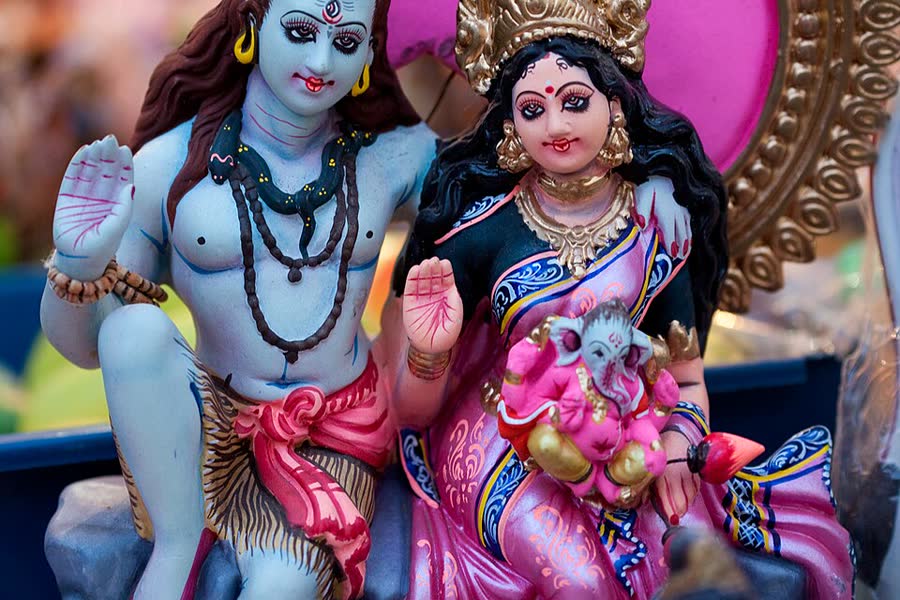
Two stories meet on this day. In much of north and central India, Dussehra remembers Lord Rama's victory over Ravana, which is why towns stage the Ramlila and burn giant effigies at sunset. In the east and south, Vijayadashami closes Navratri and celebrates the goddess Durga's victory over the demon Mahishasura, so the day is about honouring the goddess, ending the nine nights of worship, and beginning new things.
That shared idea of a fresh, auspicious start is why so many families begin something on this day: a child's first letters, a new account book, a new vehicle, or simply a promise to do better.
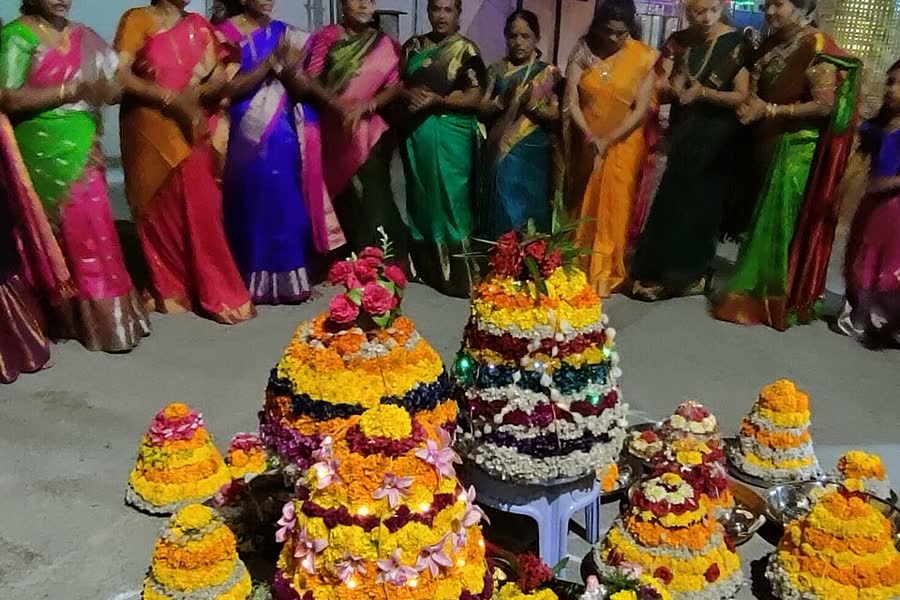
The days before Dasara belong to Bathukamma: each evening women stack seasonal flowers into tall cones and sing folk songs as they circle them, building up to the grand Saddula Bathukamma.63
Jammi (shami) puja: on Dasara, families worship the shami tree and give its leaves to elders and friends as gold.4
Alai Balai: people embrace and greet each other; Hyderabad hosts a large Alai Balai gathering the day after Dasara.5
Palapitta: spotting the Indian roller bird on Dasara is considered a good omen.3
Look out for: Bhadrakali temple, Warangal; Vemulawada; Kondagattu.3
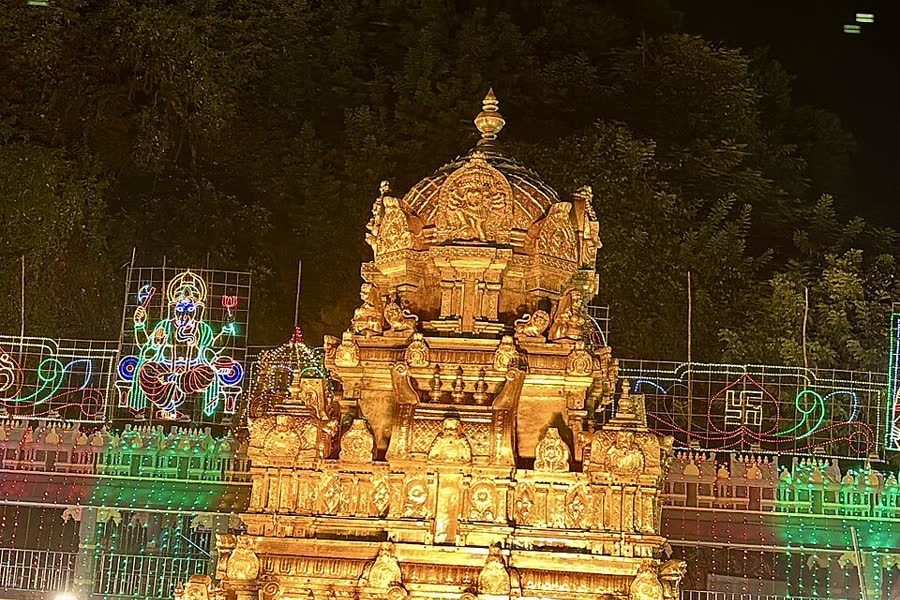
At the Kanaka Durga temple in Vijayawada, the goddess is adorned in a different alankaram on each day of Navratri, from Bala Tripura Sundari early in the festival to Rajarajeshwari on Vijayadashami.8
The festival closes with the Teppotsavam, a boat procession of the deity on the Krishna river.7
Many homes set up Bommala Koluvu, a display of dolls, and shami puja is performed on Vijayadashami.7
The order of alankarams is set by the temple each year; check its 2026 schedule before you visit.
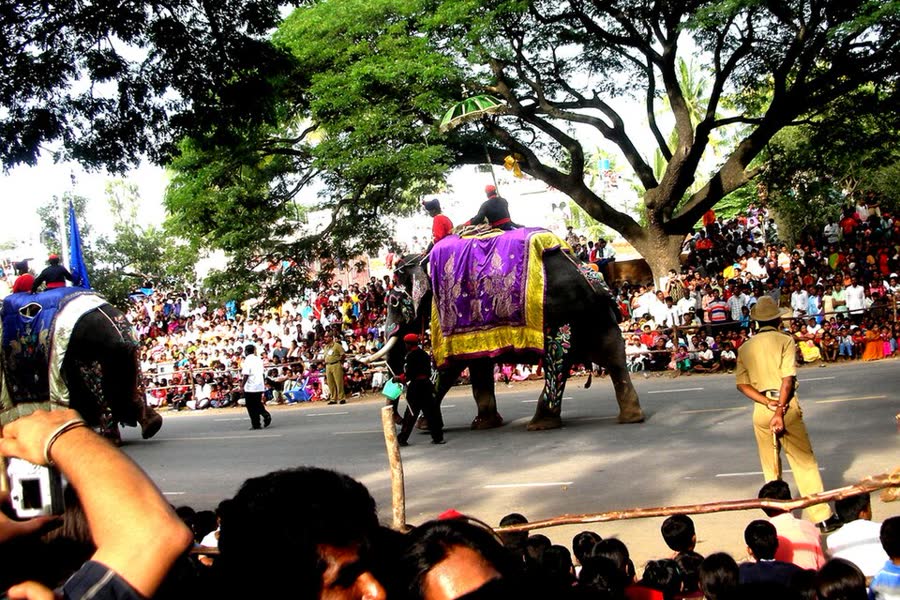
Mysuru Dasara is Karnataka's state festival. Its finale, the Jamboo Savari, carries the idol of goddess Chamundeshwari in a golden howdah, reported at about 750 kg, on a lead elephant along a roughly 5 km route from Mysuru Palace to Bannimantap.109
Tableaux and cultural troupes follow the elephants through the city.10
The evening ends with the Panjina Kavayatu, a torchlight parade at Bannimantap.10
Karnataka also has one of the biggest Vidyarambha gatherings, at Kollur Mookambika temple.14
Homes build a Golu: an odd number of steps (3, 5, 7 or 9) filled with dolls, with deities on the top step, a kalasam to anchor it, and often a wooden bride-and-groom pair, the marapachi bommai, handed down through the family. Visitors go house to house to see each other's Golu.13
The nine nights honour Durga, Lakshmi and Saraswati, three nights each, ending with Saraswati Puja, Ayudha Puja and Vijayadashami, when one doll is symbolically put to sleep.13
Kulasai Dasara at the Mutharamman temple in Kulasekarapattinam: devotees take vows and dress as deities, and the festival peaks with the Soorasamharam on the shore at midnight on Vijayadashami (20 October this year).1112
Kulasai Dasara opened with its flag hoisting on 11 October 2026.12
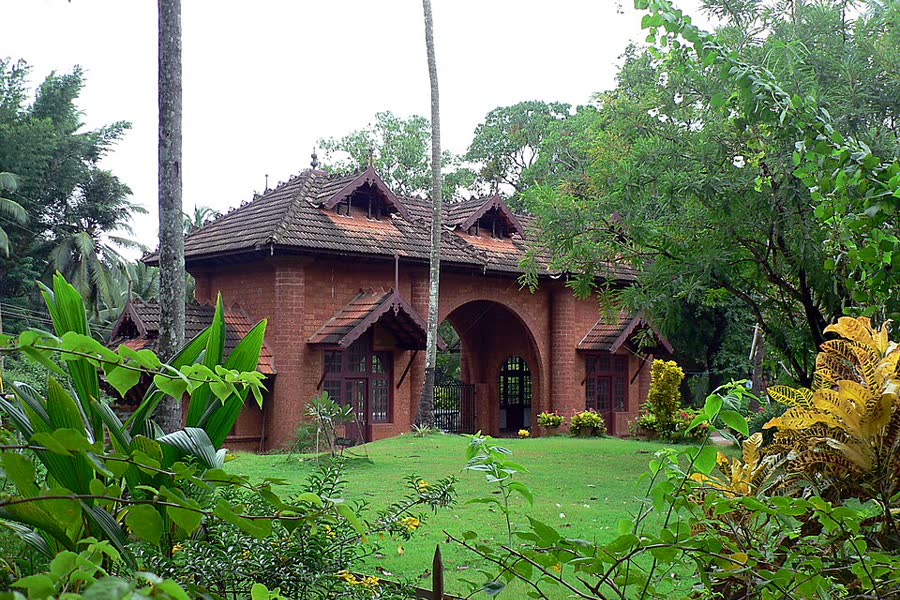
Thunchan Parambu, Tirur · Photo: Shahinmusthafa at en.wikipedia, Public domain, via Wikimedia CommonsKerala · Vidyarambham
A child's first letters
Vijayadashami is the day of Vidyarambham (also called Ezhuthiniruthu). A teacher or elder seats a young child on their lap and guides the child's finger to write "Hari Sree Ganapathaye Namah" in grains of rice, then traces it on the child's tongue with a gold ring.14
Thunchan Parambu in Tirur, birthplace of Thunchath Ezhuthachan, the father of the Malayalam language, is one of the best-known places for the ceremony.15
Once limited to some families, it is now observed by people across communities.14
Some temples mark Vidyarambham on a different day from the rest of India; follow your local almanac.
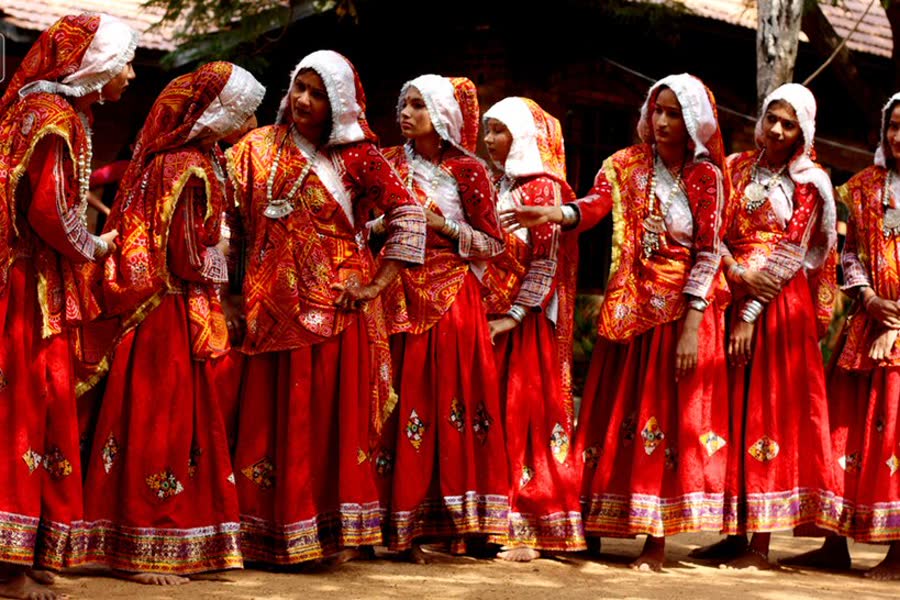
Gujarat lives Navratri through nine nights of Garba and Dandiya Raas danced in honour of Amba Mata, with Shakti temples such as Ambaji and Pavagadh drawing pilgrims.16
On Dussehra morning, queues form outside farsan shops: fafda and jalebi is the day's signature breakfast, especially in Ahmedabad.17
Many families do shastra puja and vehicle puja, and Ravan Dahan is held in the evening.17
Garba grounds are busiest on the last nights of Navratri.
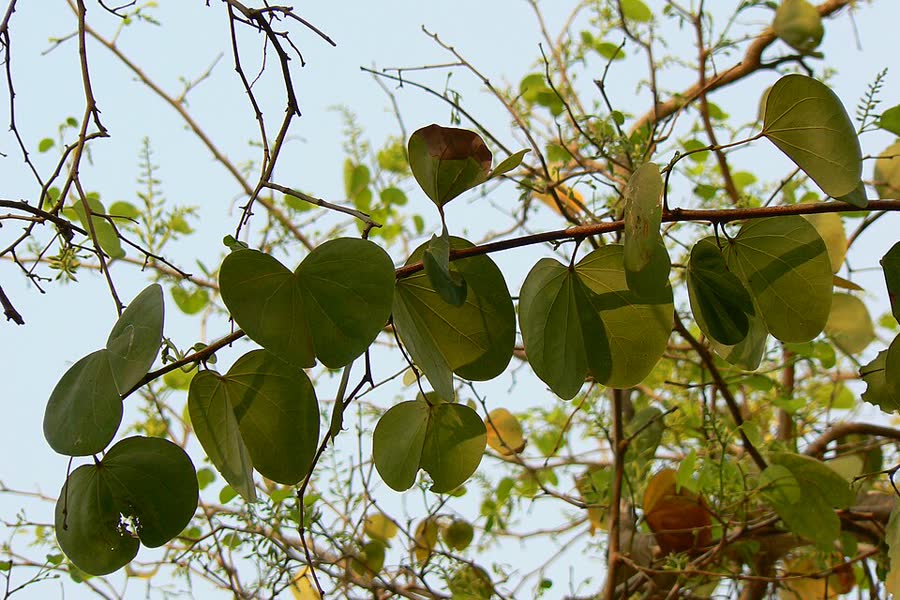
Families pluck leaves of the Apta tree (Bauhinia racemosa) and give them to each other as gold. One popular story tells of the scholar Kautsa, whose guru-dakshina was paid in gold that Kubera showered onto an Apta tree; another links it to Maratha soldiers sharing gold after a victory.18
Seemollanghan: the old custom of symbolically crossing the village or city boundary, carried on in places like Pune.18
Like Telangana's Jammi leaves, the "gold" is a wish for prosperity, not the metal.
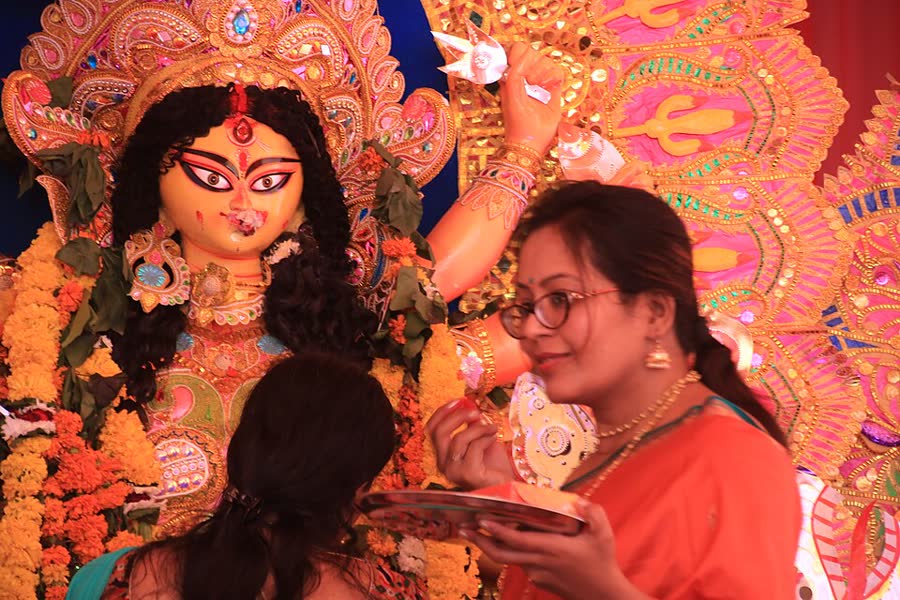
For Bengal, Vijayadashami is the last day of Durga Puja. After the symbolic ghot visarjan, married women offer sindoor and sweets to the goddess and then smear sindoor on each other in Sindoor Khela, a prayer for their families' wellbeing.1920
The idols are then carried for immersion. The day is described as joy and sorrow together: celebration, and sadness at the goddess's departure.19
Some Bengali calendars place the immersion a day later, on 21 October.3
Photo: Tanuj_handa, CC0, via Wikimedia CommonsNorth India · UP, Delhi, Bihar, Haryana, Punjab
The Ramlila and the burning of Ravan
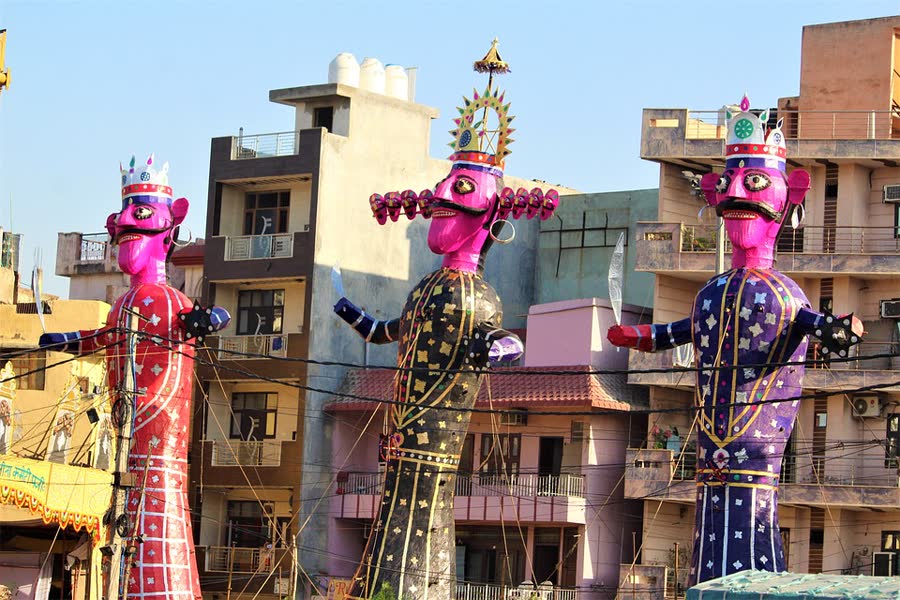
For nights before Dussehra, local troupes perform the Ramlila, the story of Rama, mostly from Tulsidas's Ramcharitmanas. UNESCO lists "Ramlila, the traditional performance of the Ramayana" as part of humanity's intangible cultural heritage.21
The Ramnagar Ramlila in Varanasi runs for about a month, with the audience moving from place to place as the story unfolds.21
On Dussehra evening, effigies of Ravana, Kumbhakarna and Meghnad are burned after sunset. Some are enormous: a Delhi committee in Dwarka built a 211-foot Ravan in 2024.22
This is the Dussehra most people picture.
Photo: Kondephy, CC BY-SA 3.0, via Wikimedia CommonsHimachal Pradesh · Kullu Dussehra
A week that starts when Dussehra ends
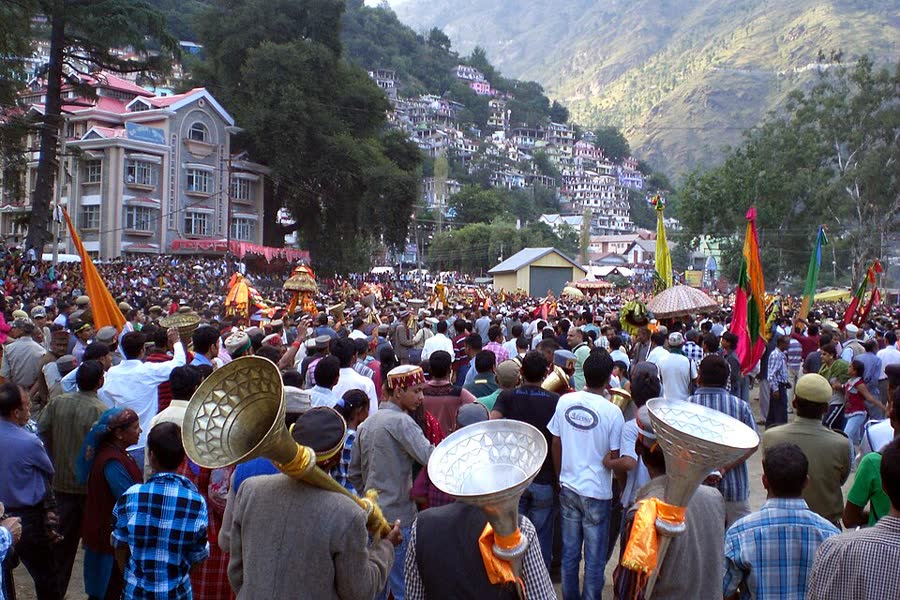
In the Kullu valley the festival starts when Dussehra ends in the rest of India. On the morning of Vijayadashami, Lord Raghunath's chariot is pulled to the Dhalpur ground, and village deities (devtas) arrive to join a week-long gathering, each with its own tent.2324
The tradition goes back to the 17th century, when Raja Jagat Singh installed the idol of Raghunath, who is still regarded as the ruling deity of the valley.24
Sources differ on the exact founding year, so we have kept to the century.
Bastar Dussehra is celebrated for 75 days, and no effigy of Ravana is burnt. It honours the goddess Danteshwari and her reunion with her sister Maoli Devi, moving from Dantewada to Jagdalpur for its final days.24
The former king of Bastar is the titular head, but the devotees and performers are Adivasi communities who worship their own gods and goddesses.24
Many Dussehra customs are about the home and the work that keeps it going. Here are three you can keep this year, wherever you live.
Honour your tools
Ayudha and shastra puja is the custom of cleaning and honouring the tools of your work: books, instruments, a workshop, a vehicle. A laptop counts too.17
Start something new
Like Vidyarambham, choose this day to begin something: a lesson, a habit, a savings plan, a project you have been putting off.14
Share the "gold"
Jammi or Apta leaves are given as gold. The real gift is the visit: call or see the elders and friends you have not met in a while.418
The ten heads within
A popular modern reading treats Ravana's ten heads as ten faults every person carries. The list varies from teller to teller; this is one of the most common:
Customs differ between families, communities and even neighbouring towns, so this guide describes common practice, not the only way. Dates come from published panchangs and festival guides; please check exact muhurat timings locally. Something we have described differently from how your family celebrates? Tell us at our contact page and we will add it.