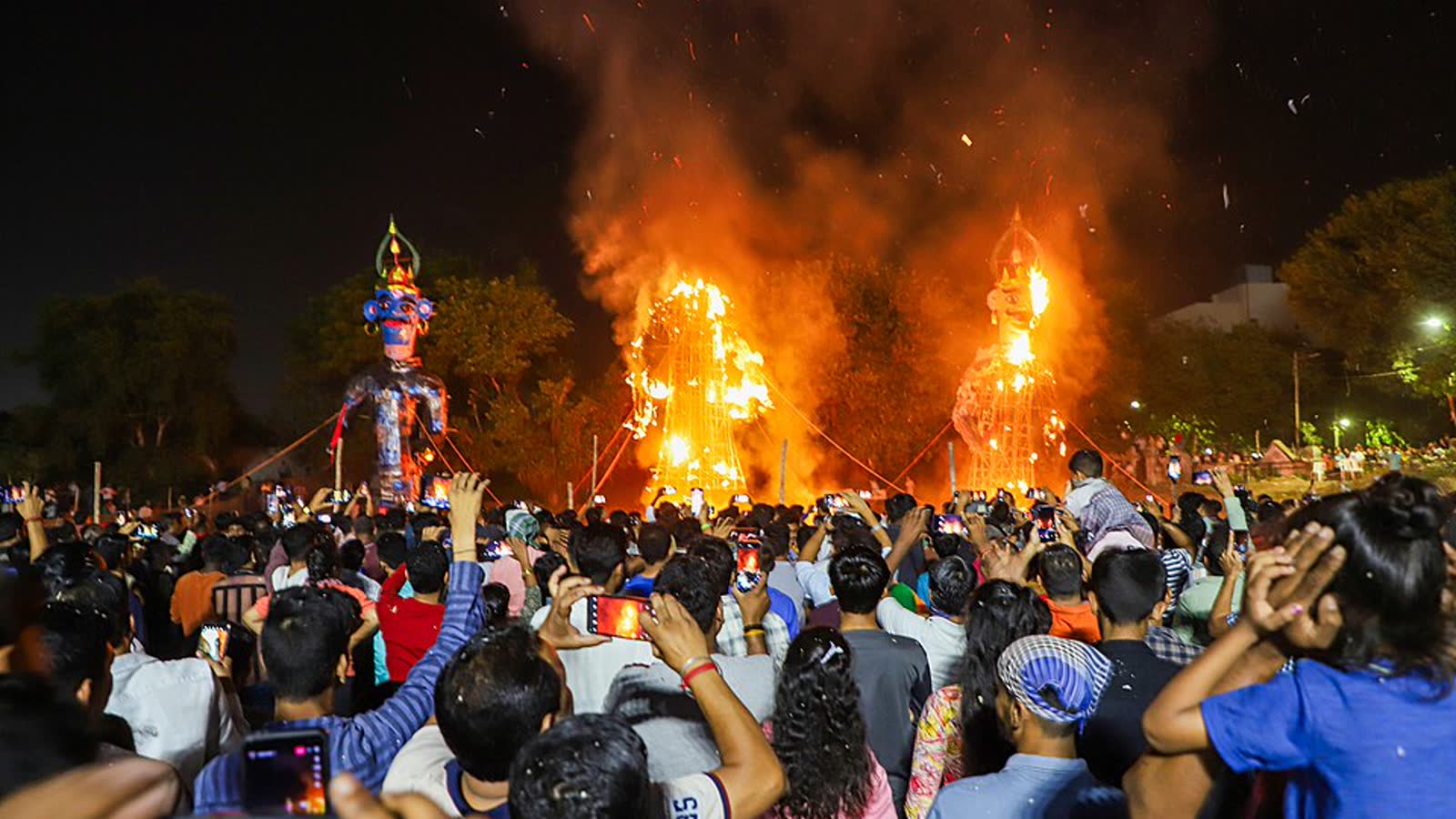
A huge crowd watches a Ravana effigy burn with fireworks on Dussehra night
Culture & Festivals

Dussehra: India's Celebration of Good Over Evil

On the tenth day after nine nights of Navratri, India marks the victory of good over evil, but each region tells the story its own way: Rama's arrow, Durga's farewell, a goddess on an elephant, a valley full of village gods, and a festival of flowers.

By GenXT LabsPublished 16 October 202610 min readJump to contents

Ravan Dahan on Dussehra night. Photo: Hetavee, CC0, via Wikimedia Commons.

Tue, 20 October 2026Dussehra / Vijayadashami1
11 – 19 OctoberSharad Navratri, the nine nights before it2
Sun, 8 NovemberDiwali, about three weeks later21
Introduction

What Dussehra means

Dussehra is celebrated on the tenth day of the bright half of the Hindu month of Ashvin, which usually falls in September or October.3 It comes straight after Navratri, the nine nights of worship of the goddess, and in Bengal it is the last day of Durga Puja, when the goddess's idols are immersed.3,9

Its other name, Vijayadashami, simply describes the day: vijaya means victory and dashami means the tenth day. The "victory" being celebrated depends on where you are.

Rama defeats Ravana

In much of north and central India, Dussehra remembers Lord Rama's victory over the ten-headed king Ravana, told in the Ramayana. Towns act out the story in the Ramlila and burn Ravana's effigy at sunset.3,4

Durga defeats Mahishasura

In eastern and southern India, Vijayadashami marks the goddess Durga's victory over the buffalo demon Mahishasura. The day ends the goddess's worship: Bengal immerses her idols, and many southern homes close their Navratri rituals.8,9

Because the festival grew out of different stories, communities and local histories, it is not one ritual repeated everywhere. Some customs belong to Dussehra itself, such as Ravan Dahan, Jamboo Savari or Sindoor Khela. Others, like Garba or Bathukamma, belong to the wider Navratri season that leads up to it. This guide notes which is which.

One Festival, Many Traditions

Pick a place to jump to its story. The card you choose is highlighted below.

North

East & Central

West

South

Main feature

Nine regional celebrations

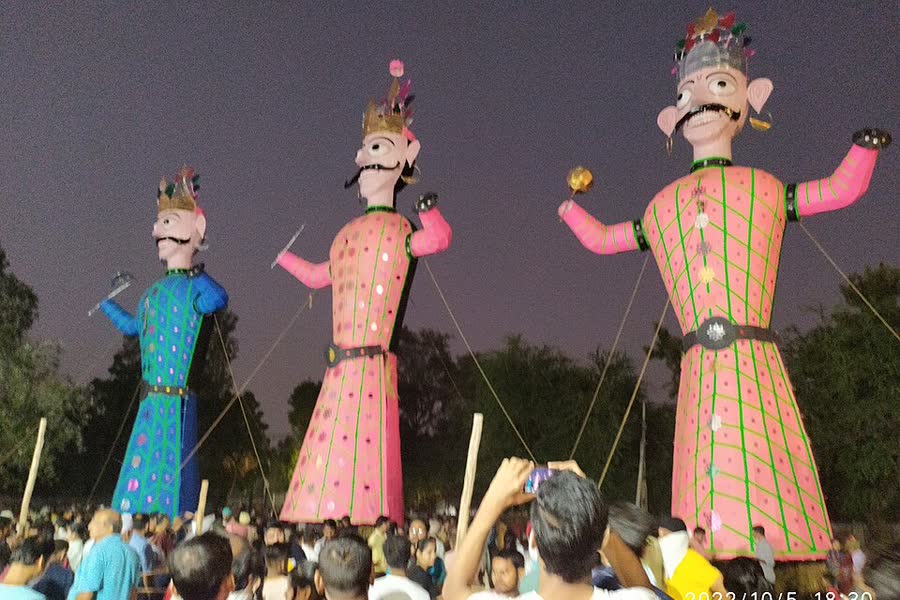
Tall effigies of Ravana, Kumbhakarna and Meghnad stand against a twilight sky before being burned in Delhi
Effigies of Ravana, Meghnad and Kumbhakarna wait for sunset in Delhi. Photo: Thesocialtalks, CC0, via Wikimedia Commons
Delhi · National Capital Territory

Ramlila nights and Ravan Dahan

For the nights of Navratri, neighbourhood troupes across Delhi stage the Ramlila, retelling Rama's story largely from Tulsidas's Ramcharitmanas, often performed by family groups who have done it for generations.4 On Dussehra evening the story reaches its climax: towering effigies of Ravana, Kumbhakarna and Meghnad, packed with firecrackers, are set alight after sunset while huge crowds watch from grounds across the city. Committees compete on size; one in Dwarka built a 211-foot Ravana in 2024.5

What makes it unique: the Ramlila is on UNESCO's list of humanity's intangible cultural heritage.4
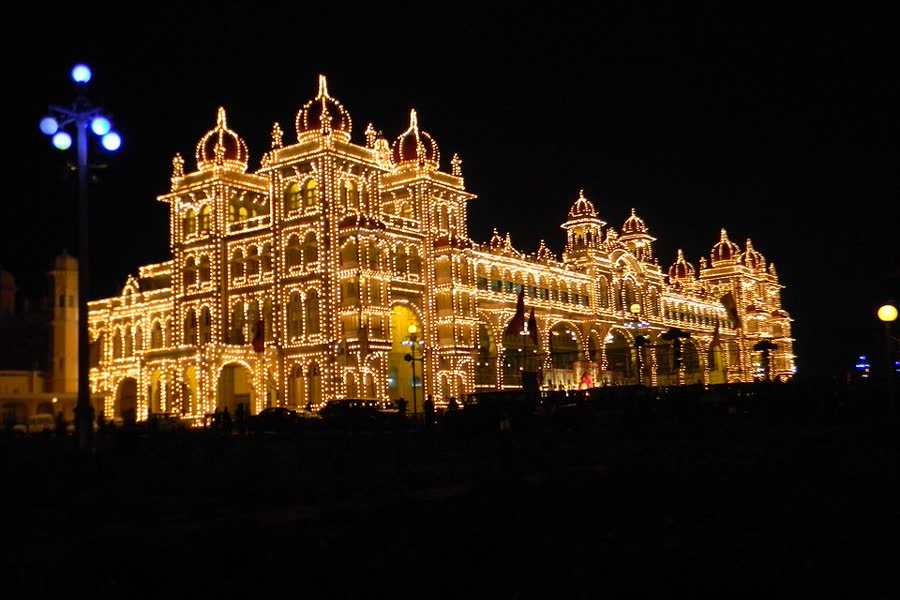
Mysore Palace outlined in thousands of glowing light bulbs at night during Dasara
Mysore Palace lit up for Dasara. Photo: V N GUPTA, CC BY-SA 4.0, via Wikimedia Commons
Mysuru · Karnataka

The royal Dasara

Mysuru Dasara is Karnataka's Nada Habba, or state festival. Through the festival the Mysore Palace glows with around 96,700 bulbs, a tradition of lighting the palace that dates back to the 19th century.6 On Vijayadashami the Jamboo Savari sets off: a lead elephant carries the idol of the goddess Chamundeshwari in a golden howdah of about 750 kg, followed by tableaux and folk troupes, on a roughly 5 km route to Bannimantap. The evening ends with a torchlight parade.7

What makes it unique: a city-wide royal procession led by an elephant carrying the goddess.

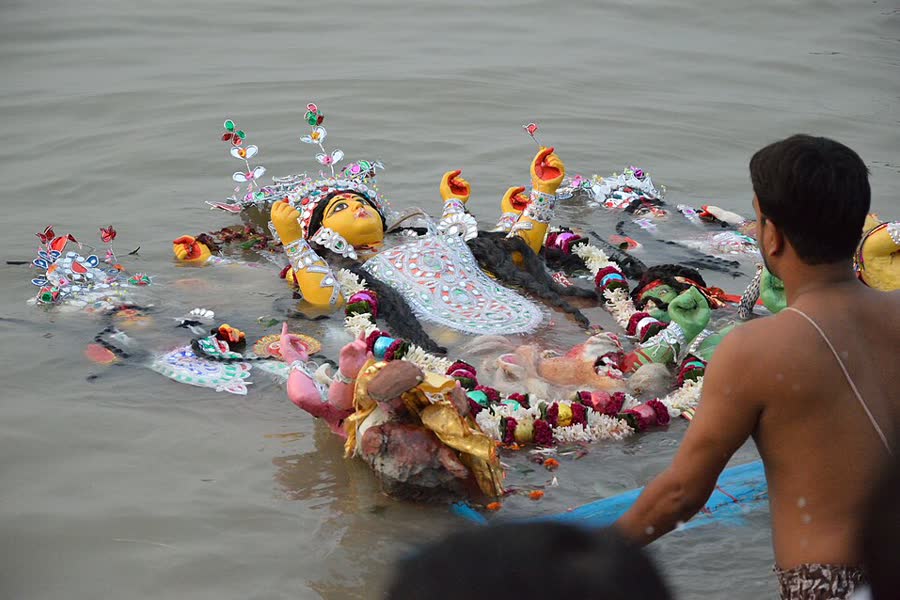
A man guides a Durga idol into the River Hooghly at Baghbazar Ghat during immersion
Immersion of a Durga idol in the Hooghly at Baghbazar Ghat, Kolkata. Photo: Biswarup Ganguly, CC BY 3.0, via Wikimedia Commons
Kolkata · West Bengal

Durga's farewell

In Kolkata, Vijayadashami, called Bijoya Dashami, is the last day of Durga Puja. After a symbolic immersion ritual, married women offer sindoor and sweets to the goddess and then smear sindoor on each other in Sindoor Khela, a prayer for their families' wellbeing.9 The idols are then carried in procession to the river and immersed. The mood is joy and sorrow together: celebration, and sadness that the goddess is leaving until next year.9

What makes it unique: "Durga Puja in Kolkata" was added to UNESCO's intangible heritage list in 2021.8

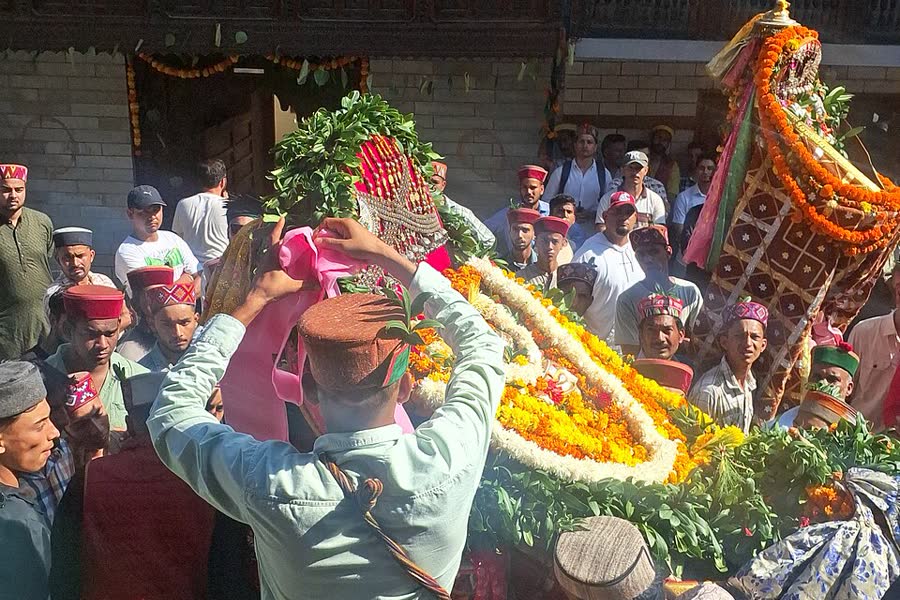
Villagers carry a decorated palanquin of a local deity to meet Lord Raghunath in Kullu
A village deity is carried to Lord Raghunath on the eve of Kullu Dussehra. Photo: Himalayanvision, CC BY-SA 4.0, via Wikimedia Commons
Kullu · Himachal Pradesh

When the valley's gods gather

In the Kullu valley the festival starts when Dussehra ends elsewhere in India.11 On the morning of Vijayadashami, the chariot of Lord Raghunath, regarded as the ruling deity of the valley, is pulled to the Dhalpur ground.10 Village deities, or devtas, are carried in on palanquins to pay their respects, and each has its own tent for the week-long gathering.11 The tradition goes back to the 17th century, when Raja Jagat Singh installed the idol of Raghunath.11

What makes it unique: a festival of local village deities, not effigy burning.

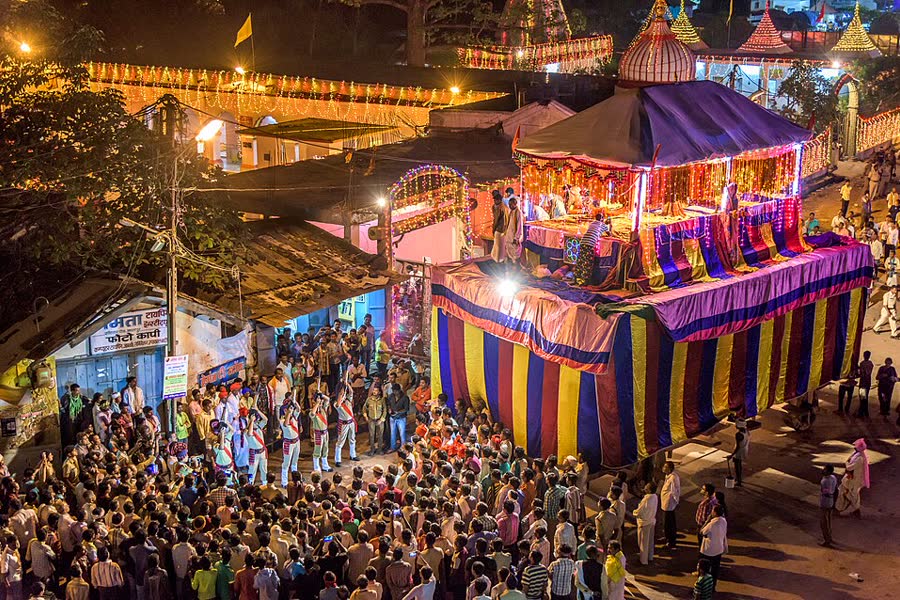
A tall decorated wooden chariot lit up at night during Bastar Dussehra in Jagdalpur
The chariot of Bastar Dussehra at night. Photo: Sushil.skk, CC BY-SA 4.0, via Wikimedia Commons
Bastar · Chhattisgarh

Seventy-five days for Danteshwari

Bastar Dussehra runs for about 75 days, with its last four days the most important.11 It honours the goddess Danteshwari and her reunion with her sister Maoli Devi, and moves from Dantewada to Jagdalpur for its closing rituals.11 The former royal family plays a ceremonial role, but the devotees and performers are Adivasi communities who worship their own gods and goddesses, and the processions include a towering wooden chariot (pictured).11

What makes it unique: no effigy of Ravana is burnt here at all.11

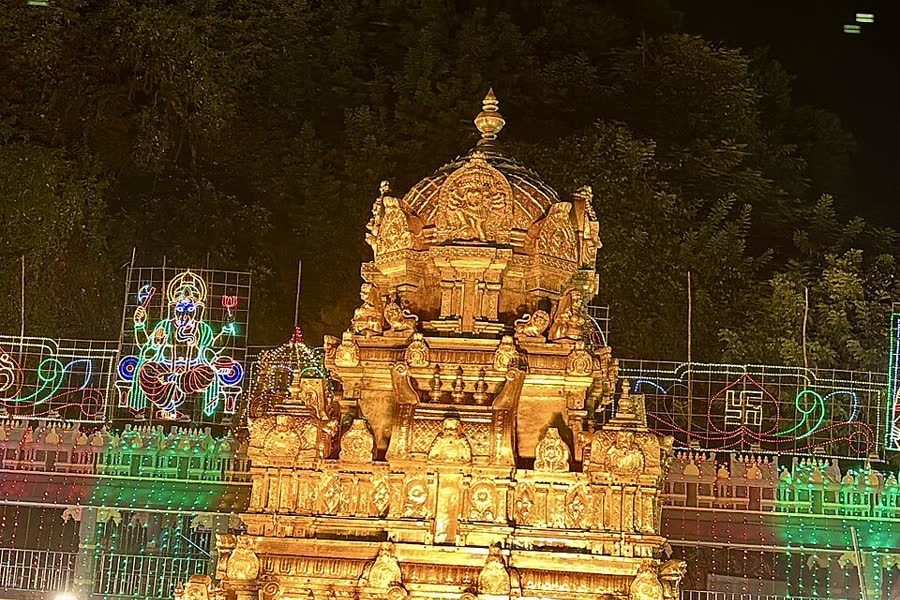
The golden gopuram of the Kanaka Durga temple in Vijayawada lit up at night
The Kanaka Durga temple gopuram, Vijayawada. Photo: Saishna96, CC BY-SA 4.0, via Wikimedia Commons
Vijayawada · Andhra Pradesh

A goddess in a new form each day

At the Kanaka Durga temple on Indrakeeladri hill above the Krishna river, Navratri is the year's biggest festival. Each day the goddess is dressed in a different alankaram, a form of the Devi, beginning with Bala Tripura Sundari and ending on Vijayadashami as Rajarajeshwari.13 Devotees climb the hill in large numbers to see each form. The festival closes with the Teppotsavam, when the deity is taken out in a decorated boat on the Krishna.12

What makes it unique: the daily change of the goddess's form, and her river procession.

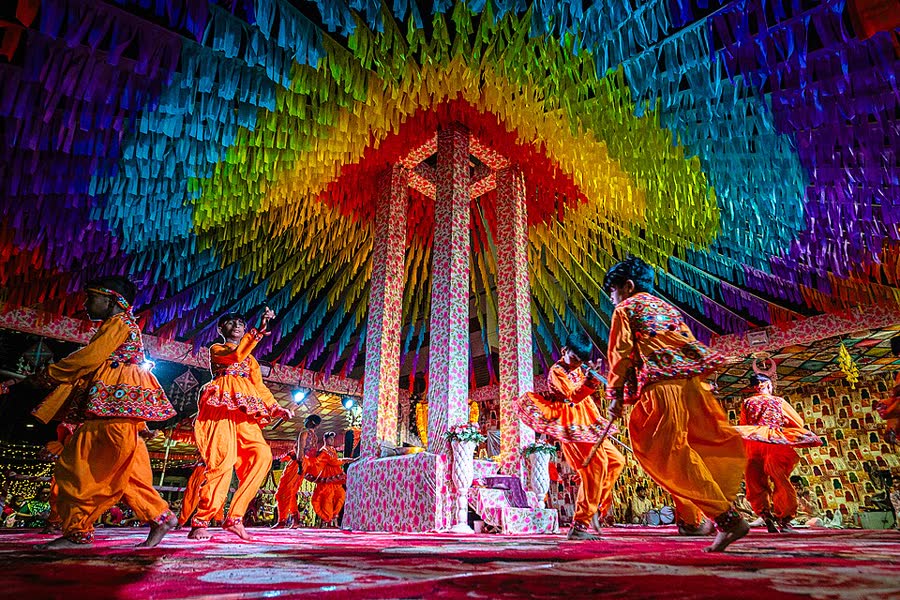
Children in matching colourful traditional costumes perform the Raas dance during Navratri
Children perform Raas in matching costumes during Navratri. Photo: Saurabh sirohiya, CC BY-SA 4.0, via Wikimedia Commons
Gujarat · Western India

Nine nights of Garba, then fafda-jalebi

Gujarat celebrates the Navratri season leading up to Dussehra with nine nights of Garba, danced in circles, and Dandiya Raas, danced with pairs of sticks, in honour of Amba Mata. Shakti temples such as Ambaji and Pavagadh draw pilgrims, and community grounds fill every night.14 Dussehra itself has its own customs: families queue at farsan shops for fafda and jalebi, many perform shastra and vehicle puja, and Ravan Dahan is held in the evening.15

What makes it unique: the dancing belongs to Navratri; Dussehra is the sweet morning after.

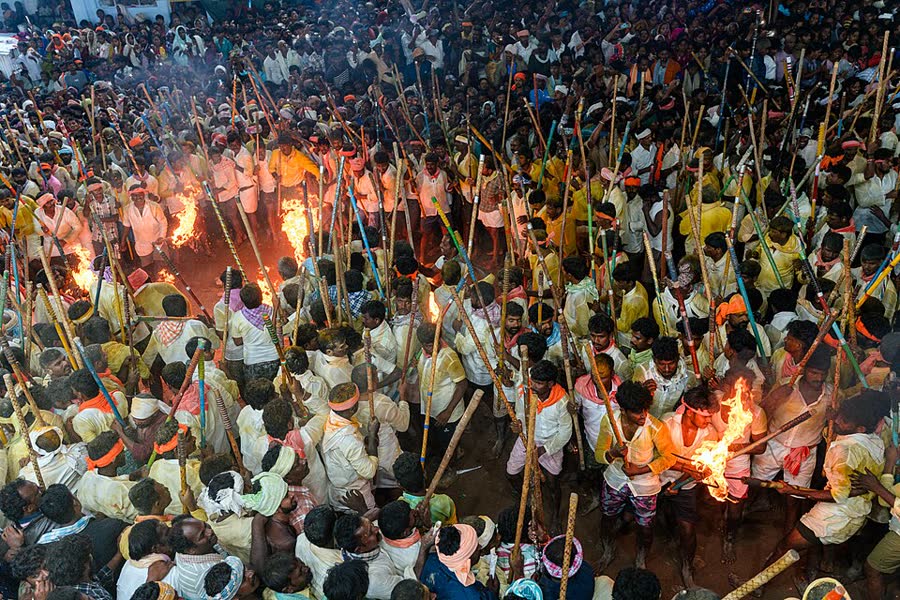
A dense crowd of devotees holding long bamboo sticks and torches at night during the Banni festival
Devotees with bamboo sticks at the midnight Banni festival. Photo: Daniele Colucci, CC BY-SA 4.0, via Wikimedia Commons
Devaragattu · Kurnool district, Andhra Pradesh

The Banni festival

On Dasara night at the Mala Malleswara Swamy temple on the Devaragattu hills, the celestial wedding of Malamma and Malleswara Swamy is held at midnight.16 The idols are then taken out in procession and groups from the surrounding villages clash with long sticks, each trying to take possession of them.16 Devotees believe it re-enacts Shiva, as Bhairava, defeating the demons Mani and Mallasura with sticks. Lakhs come from Andhra Pradesh, Telangana and Karnataka to watch.16

Injuries are reported every year and deaths have occurred; police deploy in large numbers.17 We describe it as culture, not as an event to attend.

What makes it unique: a midnight ritual battle, unlike any other Dasara in India.

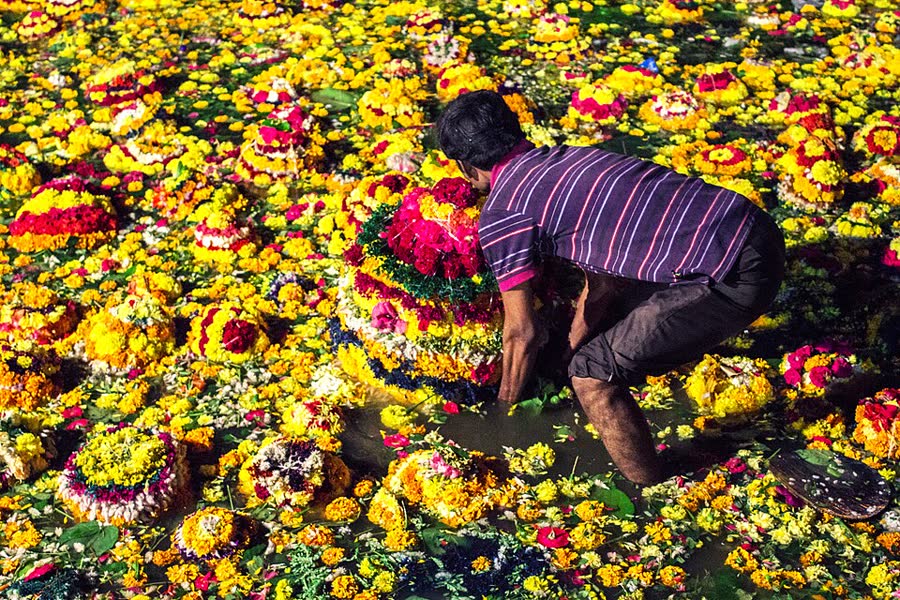
A woman places a tall, colourful flower Bathukamma on a bed of marigolds in Hyderabad
Flower Bathukammas being prepared for immersion in Hyderabad. Photo: Ailiajam, CC BY-SA 4.0, via Wikimedia Commons
Telangana

Bathukamma, the festival of flowers

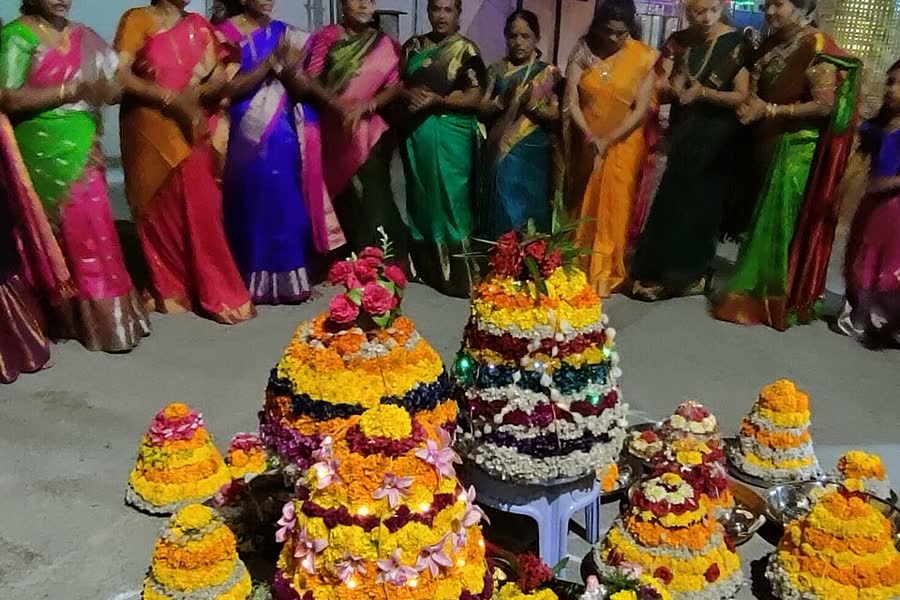
Bathukamma is Telangana's flower festival, held over the nine days of Navratri. Each evening women arrange seasonal flowers into tall, layered cones, then sing folk songs and dance in circles around them.18 The festival builds up to the grand Saddula Bathukamma, after which the flower stacks are gently set afloat in lakes and ponds.18,19 It leads into Dasara, when families perform Jammi (shami) puja and share its leaves as a symbol of gold.19

What makes it unique: a festival made almost entirely of flowers and songs, led by women.

At home

How families celebrate

Away from the big processions, much of Dussehra happens at home and in neighbourhood temples. Customs differ from family to family, but these are some of the most widely shared.

Home puja and temple visits

Families worship at a home altar and visit temples of the goddess, Rama or a local deity, often in new clothes, before sharing a festive meal.

Ayudha Puja

In much of south India, tools, instruments, books and vehicles are cleaned and honoured at the end of Navratri, a thank-you to the things that support a family's work.23,15

Beginning something new

Many communities treat Vijayadashami as the best day to start: in Kerala, young children write their first letters in rice in the Vidyarambham ceremony.20

Leaves shared as gold

Telangana's Jammi leaves and Maharashtra's Apta leaves are given to elders and friends as "gold", a wish for prosperity.19,24

Family gatherings

Relatives visit and embrace, elders bless the young, and sweets are exchanged; Telangana's Alai Balai is one such gathering.19

Cultural programmes

Ramlila stages, dance evenings, doll displays like Tamil Nadu's Golu, and music concerts fill the Navratri nights in many towns.4,23

Comparison

Dussehra vs Diwali

The two festivals are linked by the Ramayana: Dussehra marks Rama's victory, and Diwali marks his homecoming to Ayodhya, where people lit rows of lamps to welcome him.3,22 They are separate festivals with different meanings, and Diwali carries other stories too.

Dussehra / VijayadashamiDiwali
When10th day of the bright half of Ashvin (Sept–Oct). In 2026: Tue, 20 October.1New-moon night (Amavasya) of Kartika (Oct–Nov). In 2026: Sun, 8 November.21
Ramayana storyRama's victory over Ravana.Rama's return to Ayodhya, welcomed with lamps.22
Other meaningsDurga's victory over Mahishasura; the end of Navratri and Durga Puja.In many regions, the night of Lakshmi Puja for prosperity.21
Signature sightsRavan Dahan, Ramlila, Jamboo Savari, idol immersion.Diyas and lamps, rangoli, fireworks, sweets.
The feelingVictory and new beginnings.Light, homecoming and prosperity.
FAQ

Frequently asked questions

What is Dussehra?

Dussehra, also called Vijayadashami, is a Hindu festival on the tenth day of the bright half of the month of Ashvin, usually in September or October. It closes the nine nights of Navratri and celebrates the victory of good over evil. In 2026 it falls on Tuesday, 20 October.

Why is Dussehra celebrated?

In much of north and central India it marks Lord Rama's victory over Ravana. In eastern and southern India, Vijayadashami marks the goddess Durga's victory over the demon Mahishasura and the end of Navratri or Durga Puja.

Why do people burn Ravana's effigy?

Burning effigies of Ravana, his brother Kumbhakarna and his son Meghnad re-enacts the climax of the Ramayana, when Rama defeats Ravana. It is a public, symbolic way of showing the triumph of good over evil, usually held after sunset at the end of the Ramlila.

Is Dussehra the same as Vijayadashami?

Yes, they are the same day. Vijayadashami means "the tenth day of victory". Dussehra (or Dasara) is the name most used in north India, Karnataka and Telangana, while Vijayadashami is common in temples and in eastern and southern India.

How is Dussehra celebrated in different Indian states?

Delhi and north India stage the Ramlila and burn Ravana effigies; Mysuru holds a royal Dasara with an illuminated palace and the Jamboo Savari; Kolkata ends Durga Puja with Sindoor Khela and immersion; Kullu begins a week-long gathering of village deities; Bastar holds a 75-day festival for the goddess Danteshwari; Gujarat dances Garba through Navratri; and Telangana celebrates Bathukamma. See all nine celebrations.

Is Ravana Dahan practiced throughout India?

No. Ravana Dahan is mainly a north and central Indian tradition. In Bengal and much of the south the day centres on the goddess, and Bastar Dussehra burns no effigy of Ravana at all.

How is Dussehra connected to Diwali?

In the Ramayana tradition, Dussehra marks Rama's victory over Ravana and Diwali marks his return to Ayodhya, which people welcomed by lighting lamps. Diwali falls on the new-moon night of Kartika, about three weeks after Dussehra: in 2026, on Sunday, 8 November.

References

Customs differ between families, communities and towns; this guide describes common practice, not the only way. Muhurat timings vary by city, so check a local panchang. Spot something your family does differently? Tell us on our contact page.

  1. Drik Panchang: Vijayadashami 2026 date and time
  2. SmartPuja: Dussehra 2026 date, muhurat and puja
  3. Drik Panchang: Dussehra (Vijayadashami), significance and timing
  4. UNESCO: Ramlila, the traditional performance of the Ramayana
  5. Udayavani: Delhi's tallest Ravan effigy in Dwarka (2024)
  6. ETV Bharat: Mysuru Palace shines with over 96,000 bulbs (2025)
  7. ETV Bharat: Mysuru gears up for the Jamboo Savari (2025)
  8. UNESCO: Durga Puja in Kolkata
  9. The Week: Vijaya Dashami celebrated across Bengal (2025)
  10. Kullu Dussehra, Government of Himachal Pradesh: Rath procession
  11. eSamskriti: How Dussehra is celebrated across India
  12. Incredible India: Dussehra festival, Andhra Pradesh
  13. HinduPad: Vijayawada Navaratri alankarams
  14. Outlook Traveller: Your guide to celebrating Navratri in Gujarat
  15. HinduTone: Dussehra 2026 in Gujarat
  16. Wikipedia: Devaragutta Dasara festival
  17. The South First: Banni festival injuries at Devaragattu (2023)
  18. Telangana Tourism: Bathukamma, the festival of flowers
  19. HinduTone: Dussehra 2026 in Telangana
  20. ETV Bharat: Kerala marks Vijayadashami with Vidyarambham
  21. SmartPuja: Diwali 2026 date and Lakshmi Puja
  22. The Wire: The many layers of Diwali
  23. Hinduism Today: Celebrating Navaratri, Tamil style
  24. Outlook Traveller: Why Maharashtra exchanges Apta leaves as gold